Sunday, July 26, 2009

Natural Hoof Care and the Barefoot Horse


I’ve never been one for medicines and doctor visits, for myself, my son, or my horses. I have this underlying trust in beings that for the most part we are strong, healthy and have what it takes to remain so. Yes, I do know this is not always the case; life always keeps us on our toes, perhaps so we take nothing for granted, can appreciate the goodness of nature when things do go according to plan, and become stronger by handling the challenges life throws at us when things do not. The ability to turn to modern medicine has been a blessing, in fact enabled me to still be alive today, but not one I take lightly, or expect to rely on with every given ailment.

That said, you can see I tend to prefer more natural approaches to health and care of self, family, pets and animals. All the way down to their feet. I’m talking about, of course, natural hoof care for horses, or keeping horses in their natural state of being barefoot, without steel nailed onto and through the hoof wall.

The practice simply makes sense to me. As a young girl, I was able to run barefoot myself for summers on end. My feet toughened to the point of tolerating walking on glass and hot pavement, or hiking across rock and gravel. Today, I haven’t been out of the house barefoot in years, and would have trouble walking from here to the barn if I were to attempt it barefoot. I know I’m capable of getting tough again, but right now, those digits are softies.

Why can’t it, why shouldn’t it be the same with my horses? We leave them barefoot all winter without problems. But heavy use, regular work, hard trails, mountains and rocks added to the picture make it a blur of confusion. It could, should, might work…

I started by attempting to hire a barefoot trimmer for consultation. Due to our remote location, after a year of correspondence, I was still without an appointment. Anyway, we are lucky enough to have a farrier with an open mind, willing and able to learn and try natural hoof care trimming, for our sake, and for the sake of our horses.

We then did a bunch of research on the internet and learned there are about as many styles and philosophies on barefoot trimming as there are horse colors. Believing inherently that bottom line, nothing should ever be done that hurts the horse and makes him lame, the more drastic approaches were not for us.

After reading Pete Ramey’s book “Making Natural Hoof Care Work for You,” I felt I found a logical approach that would work for me and my horses. When we pulled their shoes last October and had our farrier trim throughout the winter, we felt we were on the right path.

Then the summer season happened, and as usual, it starts with a BANG and continues rattling clear through autumn. We rarely have a chance to breathe, let alone slow down. For the horses, this means time to hit the trail, and get out their regularly. There is no time to be lame, to be soft, to take it easy, to test the waters. No time to sufficiently toughen up.

And sore they did get. I tell you what, as a horse lover, let alone one who relies on horses for their business, seeing my babies sore because of my choice was a pretty tough place to be… talk about questioning yourself, your motives, your choices…

Then one day, I had a long trip scheduled on one of the rockiest trails I know in this area, which for those of you who know the San Juan Mountains, know that’s saying a lot. And my main mount, my guide horse was sore. Sore because of my decision to “try” the barefoot horse thing.

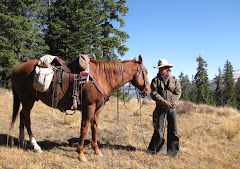
So what did I do? I turned to my back up. Another barefoot horse. One who was not sore. My little stallion, Fadjurz Ideal, otherwise known as Flying Crow. At age 7, he has never been shod. I trim his feet myself. He gets plenty of exercise (as do so many stallions on pasture, even during his free time he seems to enjoy running back and forth for hours on a path he has packed hard).

I had never guided on him before, nor ridden him on this trail, thus was more than a little apprehensive. But life throws challenges at us at times when the timing must be just right. I rode him, there and back, a full day in the mountains in some pretty nasty conditions, and you know what? We haven’t looked back since. His feet were NEVER sore from that day. Nor from the many days since that I’ve continued to keep him going on the trails with me, working and guiding.

He made a believer of me. A horse can be barefoot. In fact, a horse can thrive barefoot. The footing, the health benefits, the ease of care… it all makes sense to me, and it all can work. But it takes effort to make it work. Commitment. Time. The right conditions. Plenty of rides to allow the horse the opportunity to toughen up. Flying Crow was sore once too… about four years ago when I first brought him home from the stable in which he was raised, and turned him out on pasture. It has taken years. But it worked.

I do not doubt that this would work for all of my horses if I rode them as regularly all year long, and had them as active as my little stallion. I never manage to have all the time I wish I had for each of my horses. When and if the day comes that I do, and believe I’m working towards this, I feel certain I can prove this a success. I will be providing what I truly believe is the healthiest hoof care for my horses by keeping them barefoot.

In the meanwhile, I have my Flying Crow, barefoot and fancy free, running around the mountains with me, naturally. Reminding me (and you) that this can work. It does work and it is working. A horse can thrive barefoot, even in these conditions, in these mountains, with all this riding…

If you have any barefoot stories, ideas, suggestions or experiences to share, please leave a comment or write me directly at losttrailranch@gmail.com. I’d love to learn more and look forward to many a barefoot tales to follow…

Sunday, July 19, 2009

Lessons learned from a little stud horse

We’re finally working together, my little stud horse and I. I mean really working. Guiding rides, and riding up the mountain to our camp in the Wilderness where we work mid-week, picketing, high line, the whole nine yards for the life of a working mountain horse. As well as giving us some lovely colts…

It took us three years to get here. I often think it should have taken us three months. I suppose if I knew then what I know now, it would have been so much easier. For both of us. But it was all these lessons we learned together that got us to this point, and gave me the knowledge to do so much better… next time. In the meanwhile, he forgave me for all my mistakes, and helped me learn the right way; showed me what I needed, and is still teaching me plenty most every day.

The biggest lesson he taught me I think I only now finally get. That I need to be a good leader first, and a good friend second. Just loving him and caring for him and being nice won’t get us up the trail safely. I wished it would. I tried that for years. But he needed a leader. And once I learned to be strong and firm but fair, to be a good leader, then and only then did he really want to be my friend. Before that, I see now, our friendship was on his terms, and at my expense.

I could ask ten times. That is no longer asking. That is nagging. Horses know how to tune that out like a child of an irritating mother. I didn’t raise my child that way. Why couldn’t I treat my horse with the same respect I treat my son? I ask him once. If he doesn’t get it, I figure either he didn’t hear me, or I perhaps I didn’t communicate clearly. I may try again, a little more firmly. If I have to ask a third time, he knows I’ll demand a response, and rightfully so. It should only take once, if done right. I know how to talk to my son. It came easily to me. I treated him with the leadership I wished I received as a child. Not just friendship. But true leadership. Direction. Help. Protection. Because I care about him. I love him, and he knows it all the time. I may not play with him or be a soft and warm and fuzzy mother. He says I’m like the mama wolf, and he knows he’s safe, and he knows if I ask once, I mean it. I may not ask a second time.

Finally, I am learning to treat my horses with the same care and respect. If I care about them, I will be their leader. With love, and kindness, and strong protection. I will ask only once nicely.

Finally, I am learning to be the leader he has been looking for. Now and only now, can we truly be friends.

Monday, July 13, 2009

Part VII in the series on Horse Packing How-To: On the trail

As we head out again to the high country with our horses, this is the season to be amassing notes, photos, information and ideas to share with you at a later date and a slower time. And stories, including Floyd Stories… Ah, the ebb and flow of life. It’s flowing now. Lots of fun, and never enough time to do all we wish to accomplish on any given day. A good feeling, to have so much you want to do, you enjoy doing, you wish you could do…

In the meanwhile, a brief set of notes to share with you on horse packing. These on the actual how-to on the trail.

First of all, it sure helps if your riding horse or mule neck reins and doesn’t mind a rope under the tail. Most horses (and almost all mules) are surprisingly undisturbed by a rope rubbing under their back end and will completely ignore this, or perhaps clamp down their tail briefly. I don’t think I would like it much, so the few that do over react, and a few will, I give them time; they’ll accept it eventually.

Next, if you are leading more than one horse or mule in a pack string, take care to tie them together safely. We use a “pigging string,” a piece of bailing twine looped over the front brace of the cross bars in the pack saddle before packing the horse, and hanging out the back end of the pack over the horses rigging along their back. The lead rope of the following horse is then tied onto the pigging string. (This works well too for leading a group of saddle horses – just loop the pigging string over and under the saddle horn and be sure the cinches are tight.)

The pigging string serves as a release point in an emergency, such as a horse slipping down trail. Better to allow a break point than lose your whole string. The horse’s safety matters to me. I figure I have no right being out there working with my stock if I can’t care for them in a safe and sound manner. Pack extra bailing twine. It can snap en route. Replace it as needed. Anyway, you all know how many other uses you’ll find for string in camp if you don’t use it all getting into camp…

We tend to tie the lead rope on long enough that the following horses can put their head down to drink at creek crossings if need be. We’re often out there for long hours, and our stock work hard. For short trips, you may consider tying shorter – not so close that the horse will ride up on the horse in front, but not so long that the horse can put his head down and graze as he moseys down the trail.

Finally, the most important part is caring for your stock on the trail. I once read that a truly good packer rides looking backwards half the time. I strive to do this. I try to gently hold my riding horse up as needed at creek crossings, bridges, rocks, and other obstacles in the trail. Make sure the string all find their footing and safely cross. Keep an eye on the stock to make sure they are not being dragged along or pulling back, and that they are staying in line. The order of your stock in the pack string is essential. A bossier horse will work great in the lead to keep others in line behind, unless he or she kicks, then that one needs to be at the end of the line… unless he or she bites. Get to know your stock. Find the order that works best for them. Allow them to be happy and comfortable. I don’t want my horses grumbling and uncomfortable in the pack string. It is work, but not a bad job. They more content the stock is doing their job, the easier my job is, of course.

Wednesday, July 8, 2009

Part VI in the series on Horse Packing How-To: Packing the Load


There are a lot of adjustments to the pack saddle rigging. Spend the time to properly fix and place each strap for the most comfortable fit for your horse. The only tight fit should be with both cinches. The breast collar and crupper should be comfortable – not tight, but not so loose it hangs and rubs. Keep a good eye on your stock, especially the first few trips. Our goal is always to have our stock arrive home after a trip without rubbing, scarring or chaffing.

Like I mentioned in an earlier Floyd Story, you can over tighten the load and have a very uncomfortable horse. As with a good rider that can safely ride with a loose cinch by adjusting his or her body weight, what’s more important that a super-tight cinch is the equally balanced loads.

So, that’s where we’ll begin. Before packing the load, you need to sort and weigh the load. I can’t stress the importance of this step enough. Your goal is for equal weight and bulk on each side of the horse. Really equal. “Sort of” is not good enough. We use soft sided canvas or iron cloth panniers, and choose the gear to fit in each so that each pannier ends up approximately the same size, and definitely the same weight. Each pannier is weighed on a hanging scale (hanging from a rope in our barn or packing area at home, or from a tree limb or strong human packer at camp), and adjusted accordingly. Our goal is to be exactly equal. We will settle for no more than a pound difference. This may sound crazy, but we’ll throw in a rock to balance the load. I believe it is that important. Otherwise, you’re relying on the tightness of the lash ropes and cinches, and I don’t think my horse needs anything strapped on that tightly.

As for maximum weight, a common question asked by our clients each year, it all depends on your stock, your trails, and how far you’ll be going. We don’t overload our stock. We start at 10,000 feet elevation and go up from there on some very challenging, steep and rocky high mountain trails. I don’t need to kill my horse, or even have him wiped out or injured, for anyone’s load. We average our max load at 125 or 150 total weight per horse. That means that 125 or 150 pounds has to be evenly divided between the two panniers and the top load. (I do not include the saddle and rigging in this figure.) That ends up being plenty of weight and bulk, dead weight, mind you, for our stock to climb up these mountain trails.

To pack the load on the horse, we work as team, one of us holding the horse and reaching over to adjust the straps, as the other one lifts the panniers up onto the pack saddle rigging. When the panniers and top load are in place, a mantee or folded tarp is laid over the load. The load is then secured with the lash rope and cinch.

I imagine every packer has his or her own favorite way to secure the load. We stick with the box hitch. It’s worked for my husband quite well for 30 or 40 years now. You can learn and master “fancier” hitches like the Diamond. Whatever works for you. It is personal preference, and I imagine the several options will all work well if they are done right.

Double check your work. Loads must be even, and you can tell just from looking at your final packed stock if it is all hanging tight, secure and evenly. If not, believe me, it’s a lot easier to stop and re-pack at home or at the trail head, than on the trail after your full pack saddle rolled under the belly of your horse or mule.

Saturday, June 27, 2009

Care for the horses in camp: theory in practice


After previous posts discussing the “how to” of caring for horses while at camp, I thought it might be of help to see and read about some specifics. This is theory in practice, examples of actual situations of us caring for our horses while at camp. There is no one right way; it is a lot of trial and error, of working with the number of horses you have, their personalities, and the location and situation of where you are.

Example one: 7 horses at a new camp. The horses have worked hard, bringing us and our gear to camp, but once there, most are not working. It’s time out for a few days. Therefore, they can graze during the day.

During the day, we have set up a portable electric fence which runs from one group of trees, across the meadow, to another group of trees. It is hard to find any sort of clear path through the trees, so they act as a natural boundary. At night, the horses are tied to a high line in the middle of those trees, so it’s pretty much the center point of their world up there. A creek runs through this “corral” which is pretty handy, but if there was not, the horses would be led to a water source before turning them out and again before bringing them in. Within the corral, two horses are left free to roam (the most passive, follower types) and five of the seven horses are hobbled (the more experienced hands who have learned that hobbles won’t stop them, and those who may know the way home). A “just in case” measure. Though they can move pretty far and fast with hobbles, we usually can run faster…

At last light, we lead the horses up to the trees and tie them to the high line for the night. Lead ropes are clipped back on, or untied if they’ve been safely tied up around their neck in a no-slip knot during grazing, and hobbles are removed and now buckled losely around the horses neck so that they are handy in the morning. Each horse is given a generous handful or two of horse cookies once all are tied up. They learn to settle in for the night. A newbie may paw and become anxious, but they will learn, they will settle down with time.

At first light, I go let them off the high line. They are happy to see me and nicker and paw. I put hobbles on those that will need hobbles before I untie them. They are anxious and hungry in the morning, rightfully so, yet for my personal safety, I require that they behave and stand still while I work with them. I untie the most insecure first, and the most confident last. That way no one is left panicking back on the high line alone. Since I usually work alone in the early morning, I do what it takes to make it safe and easy for myself.

Example two: 5 horses at a familiar camp. The horses are becoming familiar with camp. They recognize the location, and seem relieved to have arrived there. They will not be working hard during the day, but we know they (like us) are happier when their bellies are full, so better to let them out grazing as much as possible.

There is no need to tie them up at night now. They know their way around, and we feel confident the portable electric corral set up across the meadow will be enough to contain them. Now when their bellies are full and they are looking for a comfortable place to rest, they return to the trees where their high line is. Although we don’t tie them up, it is now their comfort zone. We bring them a pail of horse cookies to share every time they return to the trees.

Example three: 5 horses at a familiar camp. The horses know the camp and by now call it their home away from home. There are enough of them together that they will not be looking for the horses we left behind, nor anxious to run away from camp back to the trailhead or ranch.

During the day, we picket two horses, hobble two, and let one roam free. We are certain to leave enough room between the two picketed horses that they will not tangle, and do check on them frequently in case they tie up on a bush, rock, or themselves. I have seen it happen enough that I’d rather take a few minutes every 2 hours to make certain they are all OK.

At night, they are either tied back to the high line, or brought into a small corral set up with the electric fencing to remain safe and comfortable (and close) for the night. I personally can’t sleep well with my horses picketed, but I know folks who do and have had fine luck with that.

Example four: 4 horses at a new camp. We’ve been riding all day. Both we and our horses are tired. We have a big day tomorrow, and will be moving on mid morning. Yet the camp is not familiar to our horses, and we do not feel comfortable leaving them out at night, and nor have we packed in a portable electric fence.

One horse is picketed, two are hobbled, and one is left loose. The horses must be allowed to drink (led to water if no creek in the “pasture”) and graze at least two hours that night before we tie them to the high line for the night. There is usually a good 3 hours of light after we arrive at camp in which we can leave them out to graze. Likewise in the morning, the horses are given at least two hours to graze while we have breakfast and pack up camp, before we bring the horses in to saddle and move on.

Friday, June 26, 2009

A job to do

It helps to have a job to do. A job gives us focus, direction, motivation, clear goals. It’s the same for our horses, isn’t it? Likewise, without a job, I might not ride… might not find the time. And my horses might just hang around grazing all day long.

Though coming up with a job isn’t that hard to do. Especially when it comes to horses. A job does not always have to be as intense as packing us and our gear into Ditch Camp, or pulling a slip to clear dirt. A job can be more simple to find and do. Our job can be training, which really, we can look at as an opportunity presenting itself to us every time we ride. Or clearing trail. Now that’s a great way to “write off” a trail ride as a productive afternoon well spent!

Trail clearing may not be a regular part of your riding routine, but it tends to be an important part of our spring and fall schedule, when the trails we use for day rides are accessible only as far as we maintain them. When we can, we pack the chain saw in the saddle scabbard (see above). When we can’t, as in, when we are working in the Wilderness, we carry a good saddle saw and hatchet at the least, and a two-man cross-cut saw at the most.

The stop and go for the horses, getting on and off, often at odd and uncomfortable locations, the patience of waiting while we work, of listening to the sawing and branches snapping, and allowing mounting from the “off side” – these all provide valuable opportunities for training our horses, and for us, working on our own riding skills. Each time out, we strive to improve our communication skills with our horse, which will be evident in how well they respond to the work at hand and the variety of tasks we request of them.

The goal is better set as the process, the learning, the doing; not so much as the actual amount of dirt moved or distance covered. Perhaps this is impractical in our day to day jobs, however if we look at the task at hand in terms of how we accomplish it. This is a better focus than the narrow eyed veiw of the end result. This is how through our jobs, training, for both horse and rider, is truly achieved. The goal then is keeping it positive. Or at the very least, on those difficult days when we just don’t get it all right, finding a positive note on which to end the job.

I suppose the one exception I’m able to make with myself is those times riding or being with the horse is for therapeutic value. My own therapy. No work, just being, feeling, relaxing, unwinding, breathing… I’m not talking about anything professional here, just how good I feel riding, out there with my horses. Although it is rare, I can still occasionally justify taking the time for nothing more than a simple ride, an early morning silent ride just me and my horses, at the end of the season when the trails are clear and the ranch quiet, to clear by mind and settle my soul.

I leave you today with a quote, perhaps just a quip, I saw in a fancy horsey item catalogue that’s stayed on my mind for weeks now:

Feeling down? Saddle up!

Monday, June 22, 2009

The first of summer

So much I wish I had time to share. Yet like with so many of you, suddenly we find ourselves so busy this time of year. Where did this rush come from? Catching us unprepared once again, caught up in the whirlwind of the season, but enjoying most every moment.

We’re up at our “ditch camp” with our horses four days a week, then taking day rides and giving lessons and visiting with guests two days a week, and cabin cleaning on the seventh day…

And yes, I love summer.

However, there is also so much I’ve been anxious to share – especially specifics on horse camping now that we’re out there with our horses again. (Wendy – I took many pictures of the high line and horses at camp I look forward to sharing.)

The next couple weeks are jam-packed, but I’ll look forward to catching back up and sharing much more as time allows.

In the meanwhile, here’s one thing to think about…

As I sit at camp in the early morning hours, bundled in front of the crackling fire sipping my steaming coffee, with my boys still sleeping in the tent and the horses peacefully grazing about me on the high mountain grass, I can imagine no place I would rather be, no life I would rather have.

There is a closeness to oneself one finds out there, perhaps because one has fewer distractions, only seeing if we choose to look and hearing if we choose to listen. There is a universal understanding which comes to us, however we prefer to spend time out in nature. We begin to see the Big Picture, and realize our small but blessed place within that circle of life. And there is a closeness that comes with our horses when we are out there living and working with them, day in and day out, side by side, that can not be achieved back home on the ranch or in the stables.

And so, off to the high country we head with our horses today….we’ll return Thursday evening. May you all have a wonderful week!

Saturday, June 20, 2009

Floyd's Horse Stories: Taking the sheep to the summer range


Soon after the ewes lambed out on the Ranch, and the lambs grew to be about 3 weeks old, we docked and branded and then took small bands of 150 or so pair at a time to the foot hills.

During the summer, we were permitted a total of 1200 adult sheep and their lambs on Forest Service lands. But during the latter part of May and into June, we’d drive the flock up to pasture in the foothills above the Ranch, taking the ewes and lambs up in the small bands as soon the lambs grew big enough to travel.

It was about a 6 mile trip up to the foothill pasture from the Ranch. And it was always on a Saturday when the drive took place. Funny, that’s the day when us kids (my brother, Melvin, and I) would be home from school and could take the sheep up... We did this on foot, driving the sheep slowly along for about 4-5 hours, followed later in the day by Dad, who would meet us up there in the pick up and bring us back down to the Ranch.

The first time I went up, the sheep herder went with us. That’s how we learned the way. But the sheep pretty much knew where to go in the foothills. The old ones would teach the new ones, and they would slowly move off in the right direction, urged on by the promise of greener grass. The only challenge here was keeping the little lambs moving along. They’d get tired and want to call it quits. We used to make rattles by taking a half gallon can with a handful of rocks inside, hammer the top together, drive a nail through to make hole, thread a piece of wire thru it, and had the perfect tool for tossing behind the sheep. That rattle sound would get them up and going.

As you can imagine, with the sheep spread out and grazing along the grassy hillsides, rattle snakes would get stirred up from time to time. One day, as we were driving the sheep along, there was this snake, laying there all coiled up shaking his rattle menacingly at us. Of course us kids just had to have those rattlers. Well, we found a couple rocks and then struck the snake on his head, then we stepped on his head to be safe and cut off our prized rattle.

By the way, did you know they used to actually sell canned rattle snake? Came in a small can and looked a lot like Vienna sausage. But food stuff… well, I’ll save all that for the next story. This one, we did not eat.

There was a sheep herder who stayed with the flock up on the foothills. Usually by the 10th of June, all of the range flock was in the foothills, which was BLM lands, and they would remain there until time to head to the high country. The high range on the Forest Service land was in Summitville, which was about a four day drive from that spring range.

The summer range permit allowed for the sheep to be turned out on the first of July. Most years I was unable to go because we were in the middle of haying. That kept me plenty busy. However when I was about 12 years old, a friend of Dad’s, and his son who was my age, came down from Denver to go with Dad on the sheep drive. You see, the friend had done that when he was a kid with Dad, and now he wanted his son to experience it as well. So that year, Dad let me off the hook from haying, and took me along on the sheep drive.

That first day the sheep were moved from the foothills, up to Rock Creek, which was about 7 miles, then another 3 or 4 miles to the counting corral – all on the first day. The counting corral was where the Forest Service Ranger would count the flock to be sure of our numbers.

On that morning of July 1, we rode our horses up from the Ranch and met the sheep as they were crossing Rock Creek and heading up to Dry Creek.

The camp and cooking equipment was being packed in with us on our 5 burros. Each burro carried a portion of the camp, and just followed along with us, or else we drove them along with the sheep. There were four sheep herders who would remain with the flock for the summer, who had only 2 riding horses, so they alternated walking and riding.

The burros would spend the summer with sheep in the high country as well. Dad would go up every 2 weeks to deliver resupplies and salt. He would drive up the road from Del Norte to Summitville, which went right thru the range. The sheep herders camped a mile or so off the road, but would meet up with Dad at a predetermined place every other week, leading the burros along to haul back their supplies that would get them through until the next time.

We camped that night outside the corrals in which the sheep were contained. Early the next morning, the Ranger showed up, counted the sheep, and off we went, starting up the trail to the high country with the flock of sheep before us

The second day we travelled only about 4 miles, but up an extremely steep grade. The trail went up and over Mount Baldy, a very rocky rough trail across the top of the mountain around the head of North Rock Creek and over to Blowout Pass. It was hard to move the sheep up that steep hill and across the rock slide. The widest place was maybe 8-10 feet wide. So you can imagine 1200 sheep plus their lambs, strung out for a mile or more up the steep mountain trail…

This is as far as Dad went to help. There way haying to be done, so the sheep were left in the care of the sheep herders who led the flock the rest of the way to the summer range.

From there we turned around, and rode back home in a day. Dad and his friend walked back down to the counting corral where they had the pick up truck and drove back to the Ranch. But Jimmy (the son) and I had to ride back to the ranch. Fine by me, but for poor Jimmy, who had probably only had a day or two experience horseback all his life up to this point, that 12 miles or so back down to the ranch was probably pretty long and more than a little uncomfortable. That poor kid was so tired and sore, he got off part way and walked the rest of the way back to the ranch.

I don’t know if it was much more comfortable in the truck – the road was no more than a track across the foot hills, and took Dad and his friend clear into Monte Vista, then back out the ranch. But still, they beat us home by quite some time.


Story by Floyd Getz

Thursday, June 11, 2009

Always something...

As those of you who have horses may have come to believe, if it can go wrong, it will. Careful as we may be, we can prevent most problems, but new challenges present themselves regularly. Horses have a way of reminding us to be present, to pay attention at all times, to only let your guard down in limited doses, and to always be prepared for the unexpected. Our beloved equine companions have become for us loving half-ton bundles of lessons in learning to deal with the many surprises life has to offer.

This is about the latest lesson in learning to handle the unexpected. And it’s a pretty beautiful story in the process.

Our lovely mare Willow, a 10 year old Fadjur bred Arabian mare we brought home from the Jack Tone Ranch about 3 ½ years ago now, birthed a precious little colt early in the morning yesterday. I’ll share my birthing notes at a later date – hopefully as a help to someone out there, but at the very least, as record for me. This was Willow’s third baby. She’s a beautiful mother to watch – so protective and alert in her never failing care.

Anyway, this colt is a cutie. A little elf of a fellow. Quite the contrast to his especially graceful dam, though I am certain he will one day blossom into the lovely swan. He’s got these LONG legs, I mean LOOOONG. So long, in fact, that he has no idea how to lie down. It’s a long way down from up there. And these legs are simply unruly. What’s a colt to do?

In this case, the answer seems pretty clear to this little fellow. Just don’t lie down.

But boy-oh-boy does he get sleepy, and little foals have not mastered the art of sleeping standing up very effectively. So he’s been tired, so tired…

We tried to lie him down. He’d pop right back up, as quick as those gangly legs would manage. Even when his mama and the other mare and foal are flat out and sound asleep in the afternoon sunshine. Nope, he just wouldn’t lie down.

Finally yesterday afternoon, we figured out the secret weapon to battle his exhaustion and conquer his fears. Beka.

See, if we lie him down, and Beka gently holds him and stays there with him, he’s more than happy to fall into a deep sleep. What little one wouldn’t be content sleeping in someone’s loving arms? Last night, it took him less than a minute, and Beka was stuck remaining there for over an hour as the rest of the horses decided to lie down all around her. This morning, perhaps it took a full minute before he was sound asleep, as Beka sat with him in the wet grass, with the content mother looking over.

I’m sure he’ll learn eventually, but in the meanwhile, we figure sleep is pretty important, especially to a little guy. And we’re pretty grateful to Beka for her patience and gentle care that baby and mother are obviously most comfortable with.

Spoiled? Maybe. Who cares? We’re glad to do whatever it takes to keep our little ones healthy and happy. Why not?

Anyway, Bob’s been lying the baby down by reaching over him and pulling his legs up and over like a calf at a roping. The colt ends up in Bob’s standing lap, and he gently lowers him. Baby better figure things out fast, because I don’t know how much longer Bob will be able to do this! And likewise, how much longer Beka will remain so loving and patient…

In the meanwhile, if anyone knows a better way to safely and gently lie a foal down, please drop me a note.

So, there you have it. Who would have guessed the simple act of lying down would be such a big problem? Such is life with horses…

Would we want it any other way? No. And learning to work with our horses, we then slowly learn to handle our children, our spouse, even ourselves… whatever life throws at us, in the most positive approach possible. Learning to deal with whatever comes up next in the best manner we can. We do what needs to be done, and learn to love the journey more so than some goal or final destination.

Monday, June 8, 2009

Floyd's Horse Stories: The Cattle Drive

Today I’m going to tell you about the Cattle Drives; about driving cattle from our Ranch in the valley to the mountain range where the cattle were turned out for the summer.

The Getz Ranch had a summer cattle range above Creede, Colorado. It was about 70 miles from our Ranch and took 7 days to drive the cattle up there. Dad, my Uncle Bill and a couple hired cowboys did this every year. And every year, I wanted to be there, working with them, on the back of my horse all day, heading towards the high country.


The permit allowed for the cattle to be turned out onto the range the first day of June each year. When I was 12, I was finally allowed to go. However, this presented a serious dilemma. I wouldn’t be allowed to miss school, and didn’t know if I’d be out of school in time.

That first year I went, the drive started on the very last day of school. I didn’t get to help them start from the Ranch and up the road. But I joined them late that afternoon. I rode Ginger straight from school and met up with the herd at the Cornelius Ranch, about a four mile ride from my school.

My folks had made arrangements all along the route for pastures or large corrals that we’d keep the herd in at night. My Uncle Bill would meet us there each evening with a truck load of hay and an over night camp for us. He drove a pick up in which we could haul horses, and pulled the sheep herders camp trailer. (see photo above) That trailer was set up with a kitchen to cook our meals and a bunk. Uncle Bill and Dad would cook the meals. At night, I got to sleep in that bunk, which was probably just a regular “full” size bed, in between Uncle Bill and Dad. All night, I’d either be squashed on one side or the other, but I never worried about being cold. Next to the trailer, we’d set up a tent in which the two hired cowboys slept.

As for the cows, they’d settle down in the evening when they were full. We’d be stopped for the night at a place with water, and like I said, Uncle Bill brought plenty of hay. They were contained in pasture or corral all nights except the last night, when we camped out on Forest Service lands, and the cowboys would take turns throughout the night keeping an eye on the cows to be sure none started to wander back to the Ranch or head up without us onto the range.

Well, it was about 225 head we drove up there. Each morning we’d get up as soon as it was light enough to saddle, and head out around sun up. We’d usually arrive to the night stop around 3 pm, giving us, our horses and the cows plenty of time to eat, drink and rest up. The stopping point on the second night was just on the east edge of the town of Del Norte. We’d need to get an early start on that third day because we had to drive the cattle right down through that main street of Del Norte. We’d pass through early in the morning in hopes of avoiding traffic.

The next stop was 9 miles west of Del Norte. There was a large pasture with water where we could turn the cows out for the night. And then on through the town of South Fork. There again, we tried to get through town early to avoid traffic. Even though we’d usually leave by 6 am, we were still 4 miles out of South Fork; it wouldn’t be until mid morning before we’d be driving the cattle through town, and usually quite a little traffic.

That first year I went, just as we got to South Fork, the train to Creede was coming by. The train went along the highway, right along side us. As you can imagine, it caused quite a ruckus with the cattle.

I remember another time we were going thru South Fork and the Coca Cola truck came up and wanted to go thru the herd. Usually one of the cowboys would go ahead and break a path for the vehicle to get through. Well, when that soda pop truck drives though the herd, one of the cowboys rides up along side, got his horse right next to the truck, reached in, and helped himself to about a half dozen cokes. We stopped and had a treat of a hot coke. As you can imagine, when we opened the bottles, which were hot and well shaken, about two-thirds of the pop fizzed out.

By this time, the cows were tired and sore footed from all that walking on the pavement. It was tough, and slow going. The third day was probably the hardest day on the cows. The last three days were longer, but the herd moved better off the paved road, and probably could smell the fresh mountain air like I could.

That forth night was spent up by Masonic Park, just past South Fork. One night when we were camped there at Masonic Park, for some reason one of the food boxes was left open in the back of the truck. Well, next morning, we got up and found a whole loaf of store bought bread missing. And an empty beer can in its place. Turns out a pack rat left us a shiny exchange.

Now, back in those days, the road from South Fork to Creede was not paved; it was a gravel road. We’d follow along that road and drive the cattle along until spending that fifth night up at Wagon Wheel Gap. There we pastured the cattle along the river and prepared for the next long haul.

The sixth day was longest. From Wagon Wheel Gap, we’d drive the cattle up and across the 7 Mile Bridge. There were no fences there then, no assigned pasture, just open land owned by the Forest Service. When we arrived, we pushed the cattle off the side of the road, fed them on the open ground, and had the cowboys take turns throughout the night keeping the cattle in line.

From there, it was only the final 7 miles that last day to what is now the Broken Arrow Ranch, where the cattle were turned out to the range and into the care of the cowboy who took care of them all summer.

It was a good time, I suppose the highlight of my year back then. There would be one rider in the lead. He kept the cows up front from getting too far ahead, would lead road crossing, open gates to lead the herd through, or close other gates and block side trails to keep the cows from straying

The rest of us rode drag. I’d be there, riding Ginger. Ginger knew more about herding and driving cattle than I did. He’d go up and nudge the tired calves with his nose to push them on. He knew what to do, and pretty much did it all for me. I went along for the ride.

Our horses were so well behaved; I don’t remember any issues or concerns with them. They were all used to working, and they were working all the time. It’s not like horses that are turned out most of the time then used a few times here and there. It sure made a big difference. They knew what to do, and did their job well.

There were 5 permittees back then on what was called the Park Cattleman’s Allotment. Three of the ranchers were from the Monte Vista area. The other two were ranchers from the Alamosa area, including the former Governor Adams, who shipped their cattle up to Creede on train. By about 1945, we too began to ship the cattle, and save the 7 day journey which probably took its toll on the cattle, but as you can imagine, I sure enjoyed.