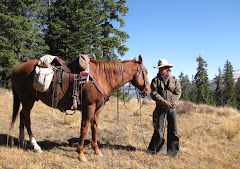
Showing posts with label thoughts on horsemanship. Show all posts

Saturday, August 13, 2011

Change!


Dear friends and readers,

Please note that although I will no longer be continuing to post on High Mountain Horse, I'm still writing (and riding!) and look forward to sharing my new adventures with you. You can find me at GinGetz.com. I look forward to seeing you there.

Warmly,
Gin

Tuesday, January 4, 2011

The last of the backyard ponies


I chose to geld my beautifully bred Arabian stallion so that no one would be pointing a blaming finger at me.

So much talk now a days about the death of the horse industry as we know it. The small time breeder has been put to blame in more than one publication. The big time breeder is still off the hook. We’re still letting them go. We’re still letting them breed the same names over and over, monotoning the colors of the horse world, saturating us with the same names and lines until we see them all intertwined and ultra related.

Where is diversity?
Where are the horses for you and me?
Or are there only meant to be the elite left riding?

I see it as the end of the back yard ponies. The rural world is changing, shrinking, going farther away, and less are going there. There are fewer folks relying on horses, owning horses, growing up with horses.

The very industry meant to support horses are helping to kill the hopes of those of us who just want a horse - not a $25,000 cutting horse prospect named Doc Peppy Bueno O’Lena from Texas.

Here’s the truth, harsh as it sounds, humble as it makes me seem: Some of us don’t NEED those horses. Some of us prefer other breeds, lesser names, the “mutts” and the horses that don’t all claim the same darned name as their sire or dam. Diversity is essential! Both in horse and in rider. Or have we forgotten?

Riding and horses are becoming elite. Let’s not encourage this elitism and discourage the responsible but smaller (oh my, but yes, perhaps lesser quality) breeder. Furthermore, I don’t know if the responsible breeder of a few horses a year is the one we should be pointing our finger at when you and I both know the large outfits keep hundreds of broodmares and produce factory “ranch colts.” But… they have known names and bloodlines so that’s all ok? I don’t think so.

Where does the problem really lie? Breeders? Maybe, but I don’t think that’s it. A shrinking industry? Hmmmm….

Saturday, March 13, 2010

Some thoughts on learning horse talk

And where do we go from here?

Tom Dorrance is often quoted as having said, “Listen to the horse. Try to find out what the horse is trying to tell you.”

But I’d like to know, how do we know what the horse is telling us until we learn to speak their language? I suppose it is easier for those born into the world of horses. That’s a great place to begin. However, for those who were not, those that sought horses on their own, and even (oh my!) not until adulthood, learning the language is more difficult. Just like learning a second language, it is of course possible, but how much easier when we are raised in a bi-lingual household!

That, my friend, is what makes a good teacher. One who can point out not only what the horse is saying, for those of us uncertain of the language, but also explain the language to us. Translate, if you please. And in time, we thus can learn to understand what the horse is saying.

It's not a matter of whispering. It's just learning to talk the horse's language. Our goal is to learn the language.

As Wendy Murdoch points out in her book, “Simplify Your Riding” (copyright 2004 by Wendy Murdoch), “The adage ‘the horse is your teacher’ is only useful if you understand what the horse is teaching. It is difficult to ‘let the horse teach you’ if you don’t know what the lesson is.”

I’m also pretty interested in Wendy’s point of view on “modern methods” of teaching in which the student/teacher/horse interact in a positive manner to achieve positive results, as opposed to “traditional methods of teaching people how to ride (which) include repetition, exhaustion, negative reinforcement, and domination…Yelling and screaming at students only drives them further into the undesirable pattern because when stressed we simply react, we don’t learn.”

I’d like to learn. I’ll choose my teachers accordingly.

Likewise, when I’m here to teach, I am learning to be a better teacher using the positive reinforcement, striving to increase both knowledge and confidence in my riders, and hopefully enjoying the process together!
Bill Dorrance stated with great importance in a special addition to his book, “True Horsemanship Through Feel” (copyright 2007 and 1999 by Bill Dorrance and Leslie Desmond), “Horsemanship through feel is handed down from one friend to another.”
I’m looking for that friend. A good teacher should be that friend, or at least, assume the role of “friend” when working with you, teaching you the horses’ language that he or she may already have figured out (or, more than likely, been taught) pretty well.
Finding that teacher, or friend, is not as easy as I had hoped...

I intend to always be learning, to always be open to new ideas, and by golly, I’ll be one lucky lady if I can keep up with working with my horses long enough to accomplish half the goals I hope to achieve in terms of horsemanship.

I will never live long enough to do it all, master all, and certainly not know it all. I know of no one who has lived that long. What I can do is enjoy learning and continue trying. What more can we each ask for?

Time to get off my high horse…

I end with a quote I read recently, though I do not know its source:

"If you always do what you always did, you'll always get what you always got."

Saturday, February 27, 2010

Pass it on


I was not raised around horses. Then, I did not know anyone who was. Even fewer have that opportunity today.

Just as this did not deter me from finding and creating a life with horses, it also need not be the demise of the horse industry. Perhaps it is just time to readjust our way of looking at the horse world.

If the numbers are fewer for those of us who live and work with horses, perhaps our responsibility for sharing our knowledge and experience is now greater. We can reach more people, teach more people, and share our life – and horses – with more, especially the younger generation who just might get the same “horse crazy” bug that many of us found ourselves with.

In fact, the sharing of our horse understanding, passions and skills need not be limited to the young. There are plenty of excellent and dedicated horsepersons – both professionals and enthusiasts – that were not “exposed” to horses until later in life. But they would never have turned to the world of horses if they never had the opportunity, the simple introduction.

That’s our job. It should be the job of all us horsemen and women to be not only ambassadors of the sport, but representatives for the horse. All we need to do is open the window to this world a little bit and let the fresh breeze flow through.

It is no longer easy. For most, horses are not readily accessible, just down the road, and part of the extended family. Demographics show our society as a whole is now further removed from the rural lifestyle – and the ensuing knowledge and experience with horses that this could allow. Horses are no longer a way of life, or even a part of life, for most families. Two generations ago, many folks still had or knew families living and working on farms with horses. With each generation, these numbers dwindle. Thus the opportunities for even the extended family and friends to “get to know” horses – say, the young suburban family coming for the weekend to visit the grandfolks who are still managing the old farm – are fewer and fewer.

But not gone. The opportunities are still there. We may just have to work a little harder to find them. And for those of us with horses, working with horses, we may just have to work a little harder to share them.

Now, I don’t want to share my horses, per say. They are not only my business and my work partners, but they are a part of my family. But what I can do is share my knowledge, share my experiences, and help pass on the passion I have for my horses, even if it means taking a friend out to the pasture to just walk by and talk to the horses, or a child out to groom and learn to pick a hoof.

It is up to those of us who still do live and work with horses to share our knowledge and pass it on. Our responsibility to teach, to share, to pass on the skills, the traditions, the ethics, manners, dedication and hard work. As an outfitter, horses have also been a part of my job. At times I am as awkward charging for my services and lesson as I often feel charging for cabin rentals when I feel like folks are here as my guests. But horses aren’t free, and they sure aren’t cheap. Feed, supplements, vet bills, shoeing expenses, transportation, insurance, tack and tools, etc., etc., etc. So yes, like it or not, sometime we do have to charge… it is a practicality we can not avoid. But it is not one that should limit us in our ability to reach others, just a minor detail.

The largest burden here seems to fall on the grandparents. And for grandfolks with horses, I’ve been told, it is not such a tough part of the job! Probably more like of the best. Sharing horses with grandkids.

Well, I don’t have grandkids yet, but I do have a bunch of young nieces and nephews. These are my surrogate grandkids for now, and the focus of my “passing it on.”

We share and show what we can, when we can. Sometimes, here, with us, will be the child’s only opportunity to glimpse into another world and take a bite, and hopefully, as is with a small but important percentage, taste enough to be hooked, to get the horse fever.

It’s not just horses; it’s the whole rural lifestyle. Camping, campfires, baking bread, gathering eggs, shoveling manure. It’s a package deal, and few kids don’t enjoy at least parts of it. They may not choose to live it, but they can love it. They will always remember this, and for those lucky enough to have had the chance to be exposed to our lifestyle and our horses, the memories and skills and understanding will remain with them forever.

Take a kid riding. Take a friend riding. Have someone share in the chores, the care, the companionship. Bring a friend to a horse show, on a trail ride, to a lesson. It can no longer be about “me and my horse.” Perhaps it’s time we began to consider it is more about “us and our horses.” All of us. So, let’s share our passion and enthusiasm for horses and riding. Let’s pass it on.

Saturday, February 20, 2010

Confidence and Knowledge


We begin in ignorance. Without knowing how little we know, we have complete confidence. A good example of “ignorance is bliss.” A great place to be, but fragile, it does not last. Reality sets in.

We begin to learn. We start to see how little we know, how little control we have, how lost we are. We can get hurt, and perhaps we do. And something happens to that confidence. A dose of reality pops our bubble of bliss. We find ourselves feeling exposed, unprotected…. And scared.

Confidence, or lack there of, is something I deal with regularly in both my riders and myself. In my riders, I can asses their level of horsemanship often based on their confidence. The complete beginner will come to the riding experience full of excitement, and without fear. They have nothing to fear yet. One who has spent some time, unfortunately this can be just one bad ride, will come in fear. They have minimal knowledge, but a healthy dose of fear. Those who have spent plenty of time riding, and time studying the horse, return to self-assurance, though one at this level still must be warned of overconfidence – the false sense of knowing enough that can block us from realizing how much we still have to learn, or prevent us from being open to learning more. This is the "good enough, it works for me" syndrome. Then the highest levels of horsemen I observe, and strive to be like. I have a long ways to go. They come in a quiet, confident air of humility. They have an abundance of knowledge and understanding, but part of that knowledge is the fact that they know there is always more to learn.

So, how do we achieve confidence?

Let me tell you, I have to work on this one regularly in everything I do. I was not born with the comfortable ego of many. Mine is frail and wavering. For years, this bothered me. I felt inferior because of it. But what I have found was that this very trait, insecurity, is what is ultimately allowing me to grow into a good horseman.

The only way I have found one can overcome fear and insecurity is through knowledge. Confidence, and I don’t mean a false sense of over inflated ego, but a true sense of quiet understanding, comes from one thing: knowledge. The more knowledge we have, the more our fears and insecurities are replaced by facts. We learn to understand, and are able to act with positive assurance because we know what works and why.

Mind you, since the best horsemen I know are always learning and growing, we must remain with an open mind, and constantly adjust, grow, and expand this base of knowledge.
And the process of replacing fear with knowledge is an enjoyable journey. We can’t learn if we aren’t willing to try. What we can do is enjoy learning. It means being with our horse, growing with our horse, and growing in our hearts and minds.

We do learn by listening. (Likewise do we miss out when we don’t listen.) One great horseman said, “Listen to the horse. He’ll tell you when you find the right answer.” For those of us desperately seeking right answers but without direct human guidance (no mentor, teacher, trainer, etc.), the horse ultimately is our best educator, and yes, will be the one to let us know when we by chance stumble on the right way of doing things.

But how do we know where to begin, what to try first? What action to take to give the horse the chance of approval or disapproval, acceptance or suggestion or revision? We are not born with this knowledge. We must strive to ascertain and achieve.

I believe a good trainer, teacher or mentor would be the best first step. They have already a base of information to share. But be warned. We can not learn it all from one person. All we learn is their way. There are many other ways. Be open. Take what knowledge you can, what works for your and your horse then and there, and be willing to move on, to try new things, to listen to others. (This is, or should be, what the best of trainers and teacher have done.) No well rounded education comes from one book.

Without a trainer/teacher/mentor, as I have been, how do we learn? Where do we begin? Clinics are one possibility, but I have seen more damage done for the insecure (not uncommonly due in part to the rudeness of the auditors than anything else). Clinics are not for everyone. If you choose this route, know what you are getting into. Auditors are a pet peeve of mine, folks who in the safety of the stands feel they are in a position to throw insults and advice at will. No one, and I mean no one, paid to learn from one not brave enough to even participate. Learn to ignore these folks and see them for what they are.

For me, books, articles and DVDs have been the best teacher. They are available even way up here on my mountain. Who do I watch and read? Everyone! Every book, magazine and DVD I can afford each year written by any horseperson of any discipline on any level. If I can not find at least one thing to learn from each, chances are I am not really watching/listening/reading.

Everyone, every experience, and every horse present an opportunity for learning if our minds are open enough to absorb. It is only when we look at life with a closed mind (“I already know that…”) that we miss the obvious lessons.

So, I strive to learn more with every encounter, every ride, every book and every DVD. And with each small piece, every tiny tidbit of information that I absorb, I find a little trace of insecurity is magically replaced with an equal amount of confidence.

If I do not seek knowledge, my insecurities have every right to remain. But the equation is simple. Knowledge brings confidence. A real, solid true confidence, like a foundation that can forever be build upon.

I read recently something like this:

We must do something we have never done before
To get where we have never been before

We must try new methods if we wish to achieve new results.

I have yet to find a horseman who could not learn more.

An open mind is essential for the growth of the rider, the understanding of the horse, the relation of the student/teacher, and an appreciation for the fullness and beauty of life.

Saturday, February 13, 2010

Sitting

I’m lucky to have the opportunity to work with beginner riders. Each new person is a new opportunity for me to improve not only my teaching methods, but my own riding skills and horsemanship. Not to mention my communication skills with my riders, which has by necessity improved tremendously over the years. At least as far as lessons are concerned. I suppose I am not the only horseman to feel I communicate better with the four leggeds than the two.

I’m learning one of the most important things I can teach – and one I overlooked for years, considering it unnecessary and taking for granted that it would just be done.

Sitting.

Sounds simple, doesn’t it?

I have found it to be one of most complicated lessons to teach, to put into words. And yet, one of the most essential, basic skills, and the perfect starting point for any rider.

Once we learn to sit, we can learn to ride.
When we sit well, we can enjoy the ride, and the horse can too.

A proper seat is taught from day one in English lessons, at least it was back in the day (we don’t need to count how many days ago) when I was taking English lessons. But for the Western rider, is it not considered until more advanced levels, and sometimes I question, if at all.

Why not?
I’m learning to bring it back to the beginning, and introducing “the seat” to my beginner riders, to help them sit comfortably and solidly on the horse from day one.

Trouble tends to be with the more experienced riders. As you’ve all seen, often the more time someone has spent riding, the more set in their ways they may be, or the more convinced they are of their way being the best way. Of course. It is easier to stick to the old way than having to learn something completely new.

Sitting does not need to be new. A good seat seems obvious, or at least, when you have it right, is hugely apparent. Likewise, when you have it wrong…

We start with breathing. How many beginner riders (or advanced riders, facing any challenge –from riding along a steep drop-off to concentrating on a new skill) hold their breath?

So we start by breathing. We remind the rider to breath. And then, with each breath, the air is taken in deeper – no longer shallow and tight in the chest, but deeper, fuller, down into the diaphragm. You can see the rider up there on the horse. When that first deep breath is taken in and then slowly released out, somehow, suddenly, they are now sitting deeper on the horse.

And yes, a deeper seat is a safer seat, a more comfortable seat, for both rider and horse.

I love to see this instant transformation. Out on trail rides, I can remind the rider of the same when I notice them perched forward in tension, already half way out of the saddle. All it would take is one quick spook of the horse to send that rider flying out and down. We remind them to breath (yes, we all need to be reminded to breath sometimes!) and there they go, settling back in, solidly in the saddle.

For myself, I must remind myself regularly as well. In any tense situation - and for any trail rider, these can come suddenly, without notice, around any corner – my common reaction is to tighten up, rise out of the saddle, lean slightly forward, and hold my breath. I catch myself doing this regularly, and remind myself to sit back. In a tense situation, the last thing my horse needs is to feel that obvious tension in me. Better for him (and therefore, for me), if I lower my energy, breath more deeply, and sit back in the saddle in times of stress. This not only calms me down, but it calms my horse down. It allows him more confidence in my leadership when he needs it most.

So, we start to learn to sit by breathing. Then we learn to move with the horse, sitting soundly with the motion below us. Again, this is commonly taught in English riding, but the Western rider is usually not taught at all, or else taught an exaggerated form of movement, an over abundance of “life” in the rider, with the rider pumping the horse beneath him to encourage each step. This translates to a great deal of constant rocking and movement in the saddle. After a couple hours – or even all day – in the saddle – that would be not only tiring for the rider, but exhausting for the horse.

Give the horse a break. Consider his back, his comfort. Become conscious of your movements. There is a pretty solid line you will find between the over-abundant rocking form of riding, and that which keeps the rider tensely perched atop the saddle, never feeling the movement below. I strive to find and ride that line, and encourage my riders to do the same.

I believe this starts with breathing. If we settle solidly into the saddle, or better yet for learning, directly on to the horses back, we can learn to feel his movements. We can learn our most solid position and see how little motion it takes from us to allow the horses freedom of movement. Consider the leverage involved with the rider atop the horse. Due to the fact that we rise up several feet from the middle of the horses back, each of our movements creates a need for shifting weight, compensation, on the part of the horse.

When we begin to see how little motion we need to allow the horse the freedom of his own movements, we begin to allow ourselves to gently shift with the horse, and allow our horse to move with greater ease. We need not encourage and pump his every movement beneath our hips with an exaggeration of movement and effort that the horse then has to adjust his own movements to compensate for the movement of the rider. Instead, we strive to find harmony with horse and his movements. We allow the horse to move, and flow with his movements. The more subtle our movements become, the more the horse can move with ease and grace and fluidity.

Several teachers suggest “playing” horse to learn such feelings. This is a great lesson to try in order to learn first hand what the horse is feeling. Start by “being” the horse. Kneel on the floor on your hands and knees, and have a friend play “rider.” Start by feeling that person gently shift with your movements. Now, ask the “rider” to tighten, tense up, and lean forward. Then ask the “rider” to exaggerate her movements, bring that abundance of life in their seat. Feel the tension and stress this creates. Pretty annoying and uncomfortable, isn’t it?

This motion is great for teaching, both horse and rider, the initial feel. But once that feel is learned, let it go, stop nagging, and allow the horse to move on his own. Movement is his job, not something I have to constantly work at by “driving” him with my own movements. Instead, I consider getting out of his way, sitting solidly, and helping the horse do the job he is most capable of doing with the least amount of interference from me as the rider.

Size is not important – I have seen excellent riders be very tall, very wide, and very small. The key is moving your body, whatever the size and shape, with horse, in harmony with the horse. Start by sitting, then by breathing. Then consider sinking in with open hips onto the horses back. Next I urge the rider to sit tall, be bigger with every breath, remaining centered. I suggest they feel one string coming up from the top and back of their spine, lifting and straightening them. Then they feel a second string dropping from their ears, through their shoulders, down past their elbow, their hips, their heels, and dropping all the way to the ground, to the solid substance beneath them.

This is the beginning of sitting, of what grounds the rider in the saddle, keeps them straight, gives them contact with and feel for the horse. This is what I try to explain to my beginner riders. Likewise, this is what I work on with myself every ride, every time.

Saturday, January 30, 2010

Mid winter thoughts on horsemanship


We find ourselves now in the deepest hour of winter, the farthest point from riding seasons, the one passed, the one anticipated.

Though thoughts of horses never cease. Likewise the care is a steady constant, despite the weather, the season, the schedule, the moods.

In this season, we are reminded that there is so much more to horses than riding. We see only an incomplete picture if we merely look at our horses and our horsemanship in terms of time riding. What we do on the ground matters – and I’m referring to much more than “groundwork” here. Or could we extend the term “groundwork” to include all interactions between horse and human? Perhaps in doing so, we learn to look at each simple interaction with new interest and value – each as an opportunity to discover and grow, for both horse and human.

Often it is through our littlest interactions that we both learn and teach the most. Think about it… what happens between us and our horse(s) during times of feeding, grooming, trimming, leading, handling, care of body and mind – both of which may need extra tending to during the slow and seemingly meaningless cold days of standing around waiting which winter often is. For us, in every interaction, there presents opportunities of gaining knowledge and growing through short and simple lessons of understanding horse behavior, subtle communication, body language, herd psychology, manners, boundaries, respect of human, love of human. Yes, I always seek this latter part as well. Love not because I have treats in my pocket (which I do not, nor do I consider the want of treats to be love) but because I am their fair but firm leader, caregiver, direction giver, provider. A gentle rub on their neck rewards them greater than a pocket full of goodies. At least, this is what I strive for…

Still, this is perhaps less a time of hands on learning as it is one of simple observation. The end result, if we are conscious and consistent, is of equal growth. Our minds must grow as our bodies do; skills of our mind must increase as do skills of our muscles. The two must balance each other. Once again, we strive for balance. How often that word is a part of our horsemanship language.

Last week, I received a note from my 10-year old niece, Alex, describing an opportunity she and her group of Girl Scouts recently had with horses. I had the honor of observing this young lady handle some of my horses almost a year ago, especially in helping me care for my broodmare, Tres, and her newborn, Artemis. I watched as Alex could with a most natural confidence and ease lead the mare through the snow with baby following close behind. I watched as my mare, who I have spent innumerable hours observing and understanding, followed Alex with lightness, interest and a respectful distance. Tres was soft, easy, observant and patient. An interesting combination of regard, sensativity and care.


Alex writes of her observation during her experience last week how the horses seemed comfortable with her: “I don't exactly know why. Maybe cuz I'm not afraid of them?? The world may never know.”


Many of us think we might know, and I suppose Alex does to a degree as well. First of all, because she’s right: she is not afraid. Second, because she also is not overwhelmingly bossy and aggressive. Only a fine balance of caring and confident. Something that at even at her young age comes quiet naturally to her, something that many are still struggling with. It is beautiful to see. The horses see it. They are not easily fooled.

I responded, “You know, I think with horses, they have a good ability to sense people. You can’t fake it with a horse. They see only what is real before them. And what they are most comfortable with in humans seems to be an interesting balance of confidence, understanding, and leadership (without any aggression or bossiness). They don’t need words like people, and they are not snuggly like puppies (though they can learn to tolerate this). They read body language, and seek being around a fair, strong, clear personality. They look for people they can be safe with, without being frightened, or feeling they have to be the leaders. Some humans are terribly wimpy, yes, perhaps because of fear, and that’s hard on a horse too. Horses are not aggressive. They prefer not to lead. You have that all quite naturally. For those of us who love horses, it’s beautiful to see.”

Alex shared this insight as well, which I thought many of us can well relate to: “Horses, to me, are kinda like detectors for emotions. When you're around them, they get scared if you are, or happy if you are.”


We will not become better horsemen simply by riding alone. Nor of course, would improve if we only did the thinking – growth requires a balance of both thinking and doing. Winter is the time for me to think: to observe, contemplate, and read and learn the theory, the theory I will then put into practice when the snow clears and I find dry dirt beneath the horses hooves. Many months away.

Sunday, January 3, 2010

New Years Resolutions

The start of a new year allows us time and encouragement (read: an excuse) to reflect upon the accomplishments, both large and small, of the past year; and to consider goals, both simple and lofty, for the year ahead. On one hand, I look at making New Years Resolutions as a trite tradition. On the other hand, I find it a missed opportunity if I pass by the occasion to reflect and review, as well as the chance to revel in hopes and aspirations.

We begin to look at the year ahead with dreams of what we would like to work on, within ourselves, and with our horses. With each horse, each lesson, each goal, each accomplishment, we evolve into a better horseman. And in turn, don’t we then evolve into a better person? We could remain stationary. What we learned yesterday is good enough. My guess is, if you’re reading this, that’s not your feeling either. Instead, more often than not, most of us strive for improvement and progress. We are not the same today as we were yesterday. Each new day is an opportunity to develop.

This development is all the more important to us because our horsemanship skills can be viewed as a clear reflection of who we are as a person. I don’t know about you, but I like to look back and see how much I have progressed with my horsemanship. The story reads like a personal growth gauge. The lessons the horses teach us, the lessons we learn interacting with horses, go far deeper than what we do in the saddle.

I allow myself the time to look where I am with each horse, and what I hope to accomplish this coming year. A review session, just me and my memories and imaginings. With each horse, there is anticipation for advancement. The greatest advancement will be, of course, somewhere inside me. I set realistic goals for each horse, each task. I look at each horse, and each goal, as an opportunity for my own growth and learning. Horsemanship does not simply represent physical tasks, but mental accomplishments every step of the way. And something great and mysterious, too, on which my words can only shed a pale light. It is this, I believe, this deeper meaning and relationship, that draws us to work with horses in the first place, and keeps us here, keeps us hooked, keeps us longing.

I begin this year by making a list of each horse, of what I hope to teach him or her, of what I need to work on within myself. It is a long list. Included are words like “patience,” “leadership,” “communication skills,” “increased knowledge,” “refinement,” “lightness.”

Each lesson is for both me and the horse. Each will teach me as I teach him or her. Every lesson is valuable, though we often fail to appreciate the value at first. Sometimes what we set out to accomplish, of course, will be far from what we achieve. The process of the lesson dictates what we ultimately learn.


All these plans, these lofty goals… and yet this year, I am willing to let them all go for the one thing that really matters: my commitment to my mares and finding a good safe place for them to foal, even if temporary, and a new ranch from which to continue our life with horses. Anything less than that is a compromise I am no longer willing to make, a selfish act based on attachment to the past, fear of moving forward, and personal comfort considered without the well being of my horses. The losses have been too great here.

That, my friends, is all I will resolve for my New Years Resolutions. The big move. That is more drastic, more time consuming, more costly, than any other I had considered. And yet… we will pull through, my horses, my family and I. And along the way, I somehow believe that if I remain with an open mind and open heart, the lessons I learn could be greater than any I ever have learned before.

So in all your time dwelling and contemplating and brewing over the New Years Resolutions you may consider for you and your horse this year, please remember too the big picture – the well being of the horse. Ultimately, what could be more important? What improvements can you make for him or her or them? Is it possible that a better life for them would also mean a better life for you?

The changes need not be as extreme as they will be for me and mine, but perhaps one small change to make their life just a little better…

Wednesday, December 30, 2009

An open mind, an open heart

Not too long ago, I read that a true horseman loves horses. Not one breed of horses. Horses. All horses.

Can we doubt this to be so? We can have personal preferences, and we do, just as one dog owner may prefer a German Shepherd and another a Chihuahua. Is one better than the other? Of course not. We appreciate the differences in dogs as we do in horses. We find what works best for us, our lifestyle, our needs, our wants, and often times, where we are at, both physically and mentally.

With this in mind, as riders, we love to ride. Not just one way. For there is no one right way. Only our personal preferences. Once again, our riding reflects our needs, wants and interests. These may change, evolve. What’s right for me may not work for you, and visa versa. As an example, here: I live in the mountains and trail ride, teach and guide. Would I not be wasting my time and resources by remaining in the arena for hours at a time practicing side passes at different gates when there are infinite lessons to be learned out there on these trails that take me and my horses places the arena never could? Yet watch me and my horse attempt a Piaffe in an arena and you might laugh or cry. Don't worry. I might too.

There is no one right way, no one right practice, no one right breed. Though we as horsemen do have the responsibility to acknowledge wrong ways, as in, anything that might hurt or damage the horse or rider.

Otherwise, we keep our minds open. Open to other riders, at other levels, in other disciplines, from other backgrounds. We acknowledge our knowledge but do not claim it to be the only way.

Or if we do… why? What are we keeping our minds closed to? What are we denying? Why must we feel superior or inferior? As horsemen, do we need to judge our fellow horsemen? And when we do, why do we feel the need and the right to critique our fellow horse lover? Open mouths too easily can replace open minds, when a simple smile or gentle word of encouragement would probably be more than enough. Instead, too often, we hear horsemen pronounce their way as the only way, their path as the only path. The blindness is unfortunate, but the damage done to the recipient of these comments is probably even worse. Would we not be wiser to be silent and allow the other to learn and grow and gain confidence along with knowledge, all the while respecting the differences of the other person?

We expand our knowledge and enrich our life with horses, and in doing so open our minds, our hearts, and our lives.

I recommend reading the article, “Cowboy Dressage: An Evolution in Horsemanship” by Jack Brainard in the September/October 2009 issue of Eclectic Horseman. Here is a master horseman, at age 75, who shows more insight and wisdom because of and through his open mind than many half his age, with half his experience. To quote Mr. Brainard, “Horsemanship does not have to be a one-way staid method of training a horse. I think there is such a thing as creative development…”

May we learn from those wiser than us. But remember: the wisest often speak the softest. The old wisdom is often true: the loudest mouths have the least to say.

Be creative. Be constructive. Be our personal best, and do the best we can with our personal choices. And remember, the person riding next to you came from a very different place, and is headed in a very different direction. Tip your hat, and ride on in a positive way. We are all horsemen. We all share the goal of being the best rider and horse handler we can be. Our journeys are all different. May we therefore look upon our fellow horseman, whoever he or she may be, at whatever level, following whatever path, with kindness and encouragement. Is that such a crazy concept?

Saturday, December 19, 2009

Beginner's mind for a horseman

How many times have you been at that point – in horsemanship or anything, for that matter – where you realize the more you learn, the more you don’t know… therefore the more you find you still need to learn? It is a snowball effect of sorts. On one hand, it is a frustrating place to be. Full of questions, self doubt, uncertainty. On the other hand, it is great, rewarding, exciting, because it reminds us of our progress and hope for betterment. We can see a difference, even if we don’t quite know what to do with it yet.

It is a paradox of learning, of life. How do you know how little you know until you start to really see? "In the beginner's mind there are many possibilities, but in the expert's there are few," wrote Shunryu Suzuki. A reminder to remain a beginner, always, and keep an open mind. If I claim to be an expert, my mind will close. I remember this every time I look around and feel lost. It is a start, and a better place to be than if I looked around and told myself (or someone else) that I knew it all.

Of course this applies to every aspect of our lives. However consider the impact of this notion on horses, horsemanship, and horse training. Imagine if we were always learning. Why can’t we be? There are no easy answers. There is no one right way. The best way is what works for us, and for our horses. And even that should be reviewed regularly updated as our knowledge and experience grow.

Drat. I wish there was one person who knew it all. I would like to study from him or her. Or read his or her book and feel confident that I had all the right answers, all the right moves, all the rights ways and means figured out. Wouldn’t that be nice? Wouldn’t that be easy?

But no one person does know it all, though teachers can be found all over. We can learn something from everyone we meet, if we keep an open mind, even if our lesson is seeing what we do not want to do or be.

Everyone has at least a little bit of wisdom. Everyone. I think we are lucky when we find a teacher with a lot of wisdom. However, we need to remember that our teacher is not simply wiser. Only that he or she has more information relevant to our growth process then and there. Tomorrow may be different. Our needs may change. Our knowledge base may have grown, or we may find set backs. The same teacher tomorrow may not be able to provide us with the knowledge we need then. We must keep an open mind. We must not drink the Kool-Aid and assume one teacher has all the right answers. Keep an open mind. Always be open to learn, to grow, to expand, to be a better rider and horseman. Remember the Zen beginner’s mind…

I thought about this recently in view of The Old Way, versus The New Way, and many ways in between. Horsemen on all levels can have a way of certainty. Many will tell you their way is The Right Way. And those with less knowledge and experience will probably be the first to say this.

So, how do we look around and know what is right? One teacher told me, “The horse will tell you.” That is a perfect answer, however getting to that point is difficult when we don’t know how to get there. We make many mistakes. I suppose that is one way to learn. My most frequent way.

Consider next the question of tradition. The value of tradition, versus holding onto tradition when perhaps it is time to let go and move on. How do we know what is right? Simple observation balanced with a gut reaction may provide the answers.

Consider this tradition. The raising of ranch horses. Hundreds of them every year, all because of a good blood line, a good name, the same name. (And we wonder why the horse market is dropping? Here’s one more factor.) The mares are mostly untouched. Rounded up and driven into a squeeze shoot just to be de-wormed (yes, I know we’ve all had horses we would have liked to do that with). The colts are rounded up as yearlings, roped and branded – sometimes with many separate brands I suppose because the ranch has so many horses they need all these numbers and symbols to keep track. That’s about it for human touch. Then they are rounded up again as two-year-olds and “broken.” Ah, but a “new and improved” more kind and gentle way. It is rushed. There are many colts. We must be practical here and get the most results in the least amount of time. Invariably, the colt is petrified of the situation due to lack of previous positive human handling. Look at his huge wide eyes, quickened breath, sweating chest, and tight muscles. He or she will probably try to buck. “Let him buck,” we are told. It is the “respectful” thing to do. I wonder. Would the colt need to buck if he was not so scared? Would he be less scared if he (and his dam) had a little more gentle human handling before training started? Consider how much time must now be spent by the trainer just to get the colt calm, peaceful, accepting of the human handler. Let alone trained.

Now that we are learning, many are becoming more open to an even better way. Wouldn’t you be curious to see a study done on the difference between these ranch colts and the imprinted colts? Who is more likely to buck? Who is more willing to learn, eager to please, easy to train, and in general, a better partner?

Just one example. There are many. I look around, observe, question what I see. How else will I learn and grow?

Ah, but it is a tradition, they tell me. Therefore…therefore I am not supposed to question, but to look upon this way with reverence. Because it did work. And now? The old ways are not always the best ways. Learn from the past, I remind myself, and move toward the future.

The questions are never ending. I suppose that’s how it has to be. We always need to ask more questions, strive for more, seek improvement. Our lives are a balance of the foundation of knowledge and the desire for betterment of ourselves, our horses, our neighbors, our world.

I look at some of the old timers who keep an open mind. After all these years of doing something one way, they are still open to see and listen and learn. What an inspiration! I hope to always be willing and able to learn something from everyone I meet. And from every horse I work with. When I am old (no wise cracks here – I’m only 43…) I hope I will not be tired of learning and more content with keeping the ways I had learned. I hope to always strive towards a better way.
I consider myself old fashioned, in many respects. But there are some things worth changing. Slowly, I see myself progressing, but I still have so far to go. I hope I always will. Acceptance won’t get me closer. Questioning will.

With everything we do with our horses, we can look at it all anew and learn something. Not because it was done is it wrong, but because perhaps there is a even better way. For our horses’ sake, it is worth considering.

I sit back on my horse, look around at the awesome landscape before us, look down at his soft and wise eyes, and remind myself to strive for a beginners mind.

Tuesday, December 15, 2009

Baby, it's cold outside

Come inside, little horse.
If I ask him, he will go. He will follow.

My little stallion, Flying Crow. What I wanted to do here was lead him through the kitchen, over by the wood stove, and have him pose before the Christmas tree. It was going to be the perfect photo op for this year’s Christmas card. Warm and cozy for a change. Our winter pictures always seem so cold and snowy.

He would have, too. But his feet were snow packed, icy, wet and slick. And after his first step off the rug onto the wood floor, his foot slipped. He would have gone, and I would have been fool enough to risk hurting him because I really wanted this picture. So we stopped here. I led him no further. My boys smiled and rolled their eyes at my attempts.

I remember my responsibility. I am amazed how he trusts me now. I do not want to destroy his faith in me. Lose his confidence for a photo op? Not worth it. I will remember this too at other times in other seasons, as we run through the mountains, up the trails, through the open meadows and across the creeks. I have a responsibility to lead. I have earned his respect. I chose to keep it. There may be times I need to push him into danger, and I will go with him, we will go together. I will lead, he will follow, he will trust.

Sure would have been a cute photo, though…

Of course, I’m also amazed that my husband let me try. The things they put up with because of our love of horses…

Saturday, December 12, 2009

One good horse

We all have heard such stories… stories of the one good horse, stories of that partner unlike any other. This was the horse that stuck by you through thick and thin; who brought you up to the winner’s circle, or safely down the steepest of slopes every time; who carried you home in the harshest of storms; who carried you farther along the trails and trials of life than any other; the one who led you where you never thought you could ride, or who you led away from his dam that very first time; or maybe the one who taught you to balance patience and kindness and softness and leadership. This was the one really special horse, the one in a million, at least for you; the one who stood by you, grew with you, allowed your weaknesses and forgave your faults, and loved you when at last you’d figure it all out just right.

I have not known that one good horse. In retrospection, I see parts of this “one horse” in all I have ridden, all I have intimately known and spent years working with. Or perhaps parts of me brought out, born and developed by each of these horses. In part, every horse has been, or has the opportunity to be, that one good horse for each of us. Perhaps, I wonder, it is up to each of us… What relationship do we choose to foster?

Berkley, who taught me a horse can be as much of a companion and personality as a human…
Apache, who taught me to race bareback and hold on tight around the curves in the road…
Jackson, who allowed to me ride into the herd, and sit back and let go as he’d cut out just the right one…
Ben, who showed me the way on the unknown trails and always knew just where to stop…
Tres, who allowed me to learn lightness, a new method, a new way, and a better life for all my horses…
Quattro, who loved to go and with a mutual trust would let him go, moving at his own rapid pace up the mountain in whatever direction I asked…
Flying Crow, who taught me to teach horses and teach myself in the language of the horse, with his infinite patience and kindness…

Yet with all these horses and more, with all these years living and working together, none have been “the one.” Yet. But all have been parts of the one great horse. And I feel very lucky for that.

Now, Tres is busy raising babies and managing the herd when I am not. Quattro is close to retirement. Crow, my dear little Crow, we have many years to work together still... Will he be the one? And will it really matter? We will both give all we can for each other. That is plenty to ask for. He will have plenty to teach me. He does most days. I suppose every horse does. As every person does, if I only take the time to listen.

So many have taught me so much and sill I have more to learn. Will I ever find one horse that is all these things for me? I think at times I cannot, for perhaps these lessons have already been taught, or new lessons are always right around the corner on every trail, in every stall in every barn. We move on, together or apart, to new lessons, new needs, new relationships, a new set of measures and emotions defining what makes that one good horse.

What about growing together? Yes… there is so much in that. What is it then? Ah… I believe they all are good. They all are so good, each and every one. It is not like choosing my husband. I am allowed many. How rich our lives are with horses!

I’m a late bloomer. It took me a while to find my husband. Perhaps it will take me longer to find that horse, that “one good horse.” A part of me believes, or maybe just hopes, that he is out there. The one. Just like with my husband and son. Another part of me believes it is like the people we meet, each one a special relationship, each one a unique individual with lessons to teach and stories to tell and a history and a future. Every relationship is what we make of it.

In every relationship, we have potential for awesome loves, lessons and partnerships. We keep our hearts open. The relationships I have now, the horses I have now, they are all together that “one” for me now. Who will be next? What lesson to I next need to learn?

It is different for each of us, as are all aspects of relationships. Goodness, however, that vague quality, remains the same within us all, within all horses, and throughout time. Although it is so hard to define, that is our measurement, our goal.

How do we know when we have that horse, that one "good" horse? How do we choose, or do they choose us? Will he come to us, or will we make him?

Perhaps we will make each other... good.

Thursday, December 3, 2009

A modest proposal in praise of rope halters

Recently, I read an article putting down the rope halter and comparing it to, seriously, a torture device. First, this made me roll me eyes. Then it made me a bit angry. I know my horses. I live and work with them. When I put a rope halter on them, I can promise you, they are not being tortured.

Being outfitters, we often leave our halters on beneath the bridle so that when I arrive at a fishing location, a picnic spot, or at camp, I can jump off my horse, clip on light lead ropes to each of the horses halters, secure the horse safely to a tree and slowly unbridle, loosen the cinch or unsaddle as necessary. I have the safety of many horses, and riders, to attend to quickly. It’s a practical, although I have been told, rather unattractive practice most outfitters choose by necessity. We may be a rough breed, outfitters, but we are practical, and those I have known, care for their horses, and know their horses, as well or better than those calling this practice ugly. Our horses are not only our passion, they are our life.

The rope halter, under the bridle, is far lighter and less distracting for both horse and rider than the heavy nylon web halter. In addition, if one claims this “torture device” is so powerful that a horse would be hurt should he or she pull back, well then, in my job, that’s fine. Don’t pull back. However, I’m afraid I haven’t found them that effective!

I am certain there are pros and cons to all kinds of halters, out of all kinds of materials. I do believe it all comes down to personal preference, and knowledge of use and handling. I would like to keep an open mind, and to use what works best for me and for my horses. I would not like to condemn others for using something different. This would only prove my ignorance. It is he who talks the most who knows the least. (Stop me before I go on too long!)

Regarding calling the rope halter a torture device, I can not say I have seen this to be true, however I can say this: the same argument has been used against all kinds of tack – from a leverage bit, a spade bit, hackamores, spurs, riding crops… you name it.

There is no replacement for good horsemanship. No tool will make us handle horses better. Or, I believe, worse. Only through our own growing knowledge of the horse and improvement of our communication skills will we be better horsemen.

So you can blame the bit, or blame the bridle, or blame the halter. Me, I’ll blame the handler. And I’ll take the blame if I am torturing my horses. But when they run to me and turn their head softly towards me as I ask them to slip on their halter… somehow, I think torture may not be the right word.

Here was my response to the finger pointed at the halter:

“Is it the tool or the handler? Any tool can have harsh results in harsh hands. Likewise, lightness from the so-called harshest of tools flows from light hands…
I make my own …they are cheap, light and handy, quite comfortable for my horses... for my use… they work for me. I work well with them. I think it's not the tool, but the handler. Likewise, with spurs, leverage bits, etc. Perhaps for folks assuming rope halters are 'natural' and therefore, only gentle, we should remind them that they, like any tool, can be harsh and cruel if used improperly. Know your tools. The best of horsemen can learn to use any tool with lightness. Rather than rely on a tool, rely on a touch.”

Monday, November 9, 2009

Peace Returns

In so many ways.
A warm spell, perhaps the last until the end of March.
Calm, a rest from work, a reprise in play, the pasture is melted out, gates open wide, spirits soar and simply run free. A letting loose across the mountain like a warm, fresh breeze. The horses pretend they are wild. They do not need me until feeding time. I let them enjoy their freedom, and watch them as if they were untamed and boundless.

The experiment worked. The stallion, Flying Crow (Fadjurz Ideal) has returned to his herd, and is getting along.

Good old ground work. All it takes is time and patience, but it works wonders. At least, that’s what I’m giving the credit to here. See, my hope was that if doing ground work with a horse improved their manners around me, perhaps my doing ground work with the stallion in and around his herd might remind him that he has to behave around the other horses as well.

For three days, I led him out of his separate pasture and into his herd and spent about fifteen minutes doing work in hand – moving front end, back end, backing up, longing, and leading. A subtle and simple dance under my lead, with his herd members flocking about him perhaps in curiosity, perhaps wishing it was they receiving my attentions.

On the forth day, I brought him out to the pasture with his herd, went through the lessons, then took off the halter and let him go. After standing there near me for a few minutes, he finally put his head down and began eating, then milling around his family. But not chasing them.

It was one of those things I kept looking out the window for, waiting for. I was sure I’d see it. I was expecting him to “remember” how badly he felt the need to run after his 2-year old, Tresjur, to boss his herd around, to give them all chase, cornering the mares and yearlings on one end, and keeping Tresjur far off on the other.

I never saw it. It never came. It never happened. Five days later, I have realized that something worked. I would like to hope I can take the credit for showing him the necessity of behaving around the herd. I would like to think it was all thanks to “ground work.”

What ever it was, something worked. I’m not the only one grateful for it. You can bet young Tresjur is mighty thankful. Was it the ground work? Maybe. I’m always amazed what it can do. Regardless, we’ve got a bunch a happier horses out there, and a happier person in here watching them all get along.

Friday, October 9, 2009

Why we love horses


Why do we love horses?
There is something wild and free.
They stir us like the wind.
We let down our hair
Untamed
Stripped of prim and fussy ways.
They touch us silently and mysteriously within.
Stir up these unsettled emotions
Or settle us down deep in our soul.
Ground us like the soil we walk together upon.
At times disturbing, racing, dancing, moving forward in a windswept blur.
Other times soothing, peaceful, warm and earthy.
Soft hair against our cheek
Their musky scent in our nose
An enchanting impression deep in our heart.
They allow us to let go
Then offer to take us there.

Thursday, October 8, 2009

Trying to be brave

Truth is, I was scared. But I had a job to do. So in the middle of the snowstorm, I saddled up my little stud horse and headed up the mountain, just the two of us, to check on a fellow outfitters camp in the high country. Four hours later, after a lot of slipping and sliding up to nearly tree line and back, my horse and I returned safe and sound, and truly exhilarated in a way, as I chatted on and on to my husband who came to meet me and help unsaddle my sweaty steed.

Sure, I have ridden alone before. And yes, I’ve ridden in the snow and mud before. And of course, I rode this little stud before. But the combination of the three together was, I considered, more than we could handle. No, I suppose I believed we could. The more I contemplated, the more I understood we both were ready; we both needed the challenge, could handle the task at hand. Probably. So why did I have this terrible stomach ache as I started to get my snow pants and down jacket on and ready for the ride?

I was trying to be brave. All I felt was scared.

Reaching beyond, extending oneself. Stepping outside ones comfort zone. For some, these things come easy. For me, they are labored and worked on, considered from all angles, and stressed about indefinitely until the knot in my stomach can no longer be ignored.

Only by doing it will I feel better.

And so, I push myself, and have learned (or at least, am learning) not to put these things off. Only through facing my fears can I overcome them. No matter how hard I have tried, and I’ve tried pretty hard, they won’t go away on their own.

A roller coaster ride, life and riding both, aren’t they? This year has been a good one for overcoming many fears with my riding and horses. And I suppose, building those fears took years as well. From the ground up, so to say. Starting with my first time being completely bucked and then bucked off again, clear out of the saddle and onto the ground. This shattered the safety I felt on a horses back. I had ridden for years and never been hurt. Ignorance was bliss, you know? I had this false idyllic bubble about me, fragile without knowing, just ready to burst with the slightest poke. And when it burst, it left me not only on the ground and in the dirt, but questioning, always wondering if it would happen again, what else could go wrong, what if, why???

It broke my trust of my “partners.” I have finally regained this trust. I no longer assume a horse would never buck me off, but I have learned to read them better, and ride even better as well. I have learned my fallibility and my faults. This does not mean we can overcome all our shortcomings and be strong, ready and prepared for every horse “incident.” But is does increase our ability to handle what may arise as we work with our horses. And since I do just that, work with them, I did not have the luxury, the excuse of waiting until I felt more comfortable. At least not all the time, though plenty of times, yes. Just ask my husband, who had to ride the rank horses time and time again first before I’d get on.

And so by having to push myself to step up to bat (or into the saddle in my case), I also learned that the best way for me to overcome my fears was to face them. A little bit of “Get over it.” A touch of “Just do it.” And a healthy dose of “Cowgirl up, sister. It’s time to ride.”

Wednesday, September 2, 2009

A DVD Review of "The Linda Tellington-Jones Series: Riding With Awareness"

Not being one to leave the mountain very often, I have learned a great deal at home from books and DVDs. They have been my horse mentors. All of different names, styles, philosophies, teachings… and from each, I have taken what works for me and my horses, at whatever level I find myself learning at… or stuck at.

After a summer of theory in practice, but little time to sit and watch a DVD, my boys are off to town (getting me, or rather my horses, more winter hay) and I found myself with time… I chose to watch “The Linda Tellington-Jones Series: Riding With Awareness” DVD. This comes with special thanks to Kim from Enlightened Horsemanship Through Touch. Thanks to her Blogging Contest earlier this year, I was able to receive and view this DVD.

Let me start by saying that although I have heard of Tellington-Jones, and the T-Touch for many years, I have not read her books nor seen her speak first hand. From there, I can tell you, I learned it is time I did…

The majority of the material covered in this DVD is not basic, introductory information about the TTEAM approach, philosophy and method. It is assumed (and suggested) that the viewer has essential knowledge of Tellington teachings. I did not, however was still able to get a good deal out of this DVD. In fact, I was so inspired by the bits and pieces I could put together from her very clear and simple teachings, combined with my previous horsemanship knowledge, that after viewing mid-way, I couldn’t resist running out, saddling up my little Arab stallion and trying some new stuff with him. To great result. Then after watching the second half, I can’t wait to saddle up again tomorrow to test out more new methods.

Her teaching made sense to me. The fundamental premise she began with was the statement that everything you do should be as comfortable as possible for you and your horse. If it’s uncomfortable for either one, we (more than likely: me) are doing something wrong. I fully agree, however I do not always figure out the right way on my own.

Her section on practicing hand movements with the reins on an innocent victim (her sister) were so clear that although I could not find a willing victim, I could see the point Linda was making, and you just sort of “feel” the right way as she’s talking and showing you, if you pay attention. Likewise, her simple demonstration of the posting trot, again using her sister here standing up from a chair, was one of those “Duh, why didn’t I think of that before?” moments.

I do not (to refer back to a comment from Jane of the Literary Horse) drink anyone’s Kool Aid, but try to take what works for me, my horses, and my somewhat unusual circumstances of high mountain outfitting with a positive approach to horsemanship. And although I do believe everyone out there has something to teach you if you’re open to listen and learn, there are some people you can see have obvious and great knowledge, skill and insight when it comes to riding, horses and horse handling. I could see Tellington-Jones was one such person, and that I would be smart to take the time to listen to her. I may not want to follow her or any teacher’s direction 100%, but a good teacher I would imagine leaves room for the student to take what works for them and their horses, and put new theory into practice.

For example, although I believe all horses should accept and understand a variety of bits, I prefer riding and refining my little stud with a hackamore, a traditional rawhide bosal and horsehair mecate. Many of the same principles Linda teaches for her roller leverage bit worked wonderfully well with the hackamore.

Well, a detailed review for those already knowledgeable of Tellington’s TTEAM solutions this is not. But for those of us “green” to her teachings yet with a basic knowledge of horsemanship skills, it’s a good step forward in learning, and a good start to understanding the T-Touch and TTEAM systems. I can say it has inspired me to see and learn more from Linda Tellington-Jones… Any more contests coming up, Kim?

Sunday, July 19, 2009

Lessons learned from a little stud horse

We’re finally working together, my little stud horse and I. I mean really working. Guiding rides, and riding up the mountain to our camp in the Wilderness where we work mid-week, picketing, high line, the whole nine yards for the life of a working mountain horse. As well as giving us some lovely colts…

It took us three years to get here. I often think it should have taken us three months. I suppose if I knew then what I know now, it would have been so much easier. For both of us. But it was all these lessons we learned together that got us to this point, and gave me the knowledge to do so much better… next time. In the meanwhile, he forgave me for all my mistakes, and helped me learn the right way; showed me what I needed, and is still teaching me plenty most every day.

The biggest lesson he taught me I think I only now finally get. That I need to be a good leader first, and a good friend second. Just loving him and caring for him and being nice won’t get us up the trail safely. I wished it would. I tried that for years. But he needed a leader. And once I learned to be strong and firm but fair, to be a good leader, then and only then did he really want to be my friend. Before that, I see now, our friendship was on his terms, and at my expense.

I could ask ten times. That is no longer asking. That is nagging. Horses know how to tune that out like a child of an irritating mother. I didn’t raise my child that way. Why couldn’t I treat my horse with the same respect I treat my son? I ask him once. If he doesn’t get it, I figure either he didn’t hear me, or I perhaps I didn’t communicate clearly. I may try again, a little more firmly. If I have to ask a third time, he knows I’ll demand a response, and rightfully so. It should only take once, if done right. I know how to talk to my son. It came easily to me. I treated him with the leadership I wished I received as a child. Not just friendship. But true leadership. Direction. Help. Protection. Because I care about him. I love him, and he knows it all the time. I may not play with him or be a soft and warm and fuzzy mother. He says I’m like the mama wolf, and he knows he’s safe, and he knows if I ask once, I mean it. I may not ask a second time.

Finally, I am learning to treat my horses with the same care and respect. If I care about them, I will be their leader. With love, and kindness, and strong protection. I will ask only once nicely.

Finally, I am learning to be the leader he has been looking for. Now and only now, can we truly be friends.

Friday, June 26, 2009

A job to do

It helps to have a job to do. A job gives us focus, direction, motivation, clear goals. It’s the same for our horses, isn’t it? Likewise, without a job, I might not ride… might not find the time. And my horses might just hang around grazing all day long.

Though coming up with a job isn’t that hard to do. Especially when it comes to horses. A job does not always have to be as intense as packing us and our gear into Ditch Camp, or pulling a slip to clear dirt. A job can be more simple to find and do. Our job can be training, which really, we can look at as an opportunity presenting itself to us every time we ride. Or clearing trail. Now that’s a great way to “write off” a trail ride as a productive afternoon well spent!

Trail clearing may not be a regular part of your riding routine, but it tends to be an important part of our spring and fall schedule, when the trails we use for day rides are accessible only as far as we maintain them. When we can, we pack the chain saw in the saddle scabbard (see above). When we can’t, as in, when we are working in the Wilderness, we carry a good saddle saw and hatchet at the least, and a two-man cross-cut saw at the most.

The stop and go for the horses, getting on and off, often at odd and uncomfortable locations, the patience of waiting while we work, of listening to the sawing and branches snapping, and allowing mounting from the “off side” – these all provide valuable opportunities for training our horses, and for us, working on our own riding skills. Each time out, we strive to improve our communication skills with our horse, which will be evident in how well they respond to the work at hand and the variety of tasks we request of them.

The goal is better set as the process, the learning, the doing; not so much as the actual amount of dirt moved or distance covered. Perhaps this is impractical in our day to day jobs, however if we look at the task at hand in terms of how we accomplish it. This is a better focus than the narrow eyed veiw of the end result. This is how through our jobs, training, for both horse and rider, is truly achieved. The goal then is keeping it positive. Or at the very least, on those difficult days when we just don’t get it all right, finding a positive note on which to end the job.

I suppose the one exception I’m able to make with myself is those times riding or being with the horse is for therapeutic value. My own therapy. No work, just being, feeling, relaxing, unwinding, breathing… I’m not talking about anything professional here, just how good I feel riding, out there with my horses. Although it is rare, I can still occasionally justify taking the time for nothing more than a simple ride, an early morning silent ride just me and my horses, at the end of the season when the trails are clear and the ranch quiet, to clear by mind and settle my soul.

I leave you today with a quote, perhaps just a quip, I saw in a fancy horsey item catalogue that’s stayed on my mind for weeks now:

Feeling down? Saddle up!

Thursday, June 11, 2009

Always something...

As those of you who have horses may have come to believe, if it can go wrong, it will. Careful as we may be, we can prevent most problems, but new challenges present themselves regularly. Horses have a way of reminding us to be present, to pay attention at all times, to only let your guard down in limited doses, and to always be prepared for the unexpected. Our beloved equine companions have become for us loving half-ton bundles of lessons in learning to deal with the many surprises life has to offer.

This is about the latest lesson in learning to handle the unexpected. And it’s a pretty beautiful story in the process.

Our lovely mare Willow, a 10 year old Fadjur bred Arabian mare we brought home from the Jack Tone Ranch about 3 ½ years ago now, birthed a precious little colt early in the morning yesterday. I’ll share my birthing notes at a later date – hopefully as a help to someone out there, but at the very least, as record for me. This was Willow’s third baby. She’s a beautiful mother to watch – so protective and alert in her never failing care.

Anyway, this colt is a cutie. A little elf of a fellow. Quite the contrast to his especially graceful dam, though I am certain he will one day blossom into the lovely swan. He’s got these LONG legs, I mean LOOOONG. So long, in fact, that he has no idea how to lie down. It’s a long way down from up there. And these legs are simply unruly. What’s a colt to do?

In this case, the answer seems pretty clear to this little fellow. Just don’t lie down.

But boy-oh-boy does he get sleepy, and little foals have not mastered the art of sleeping standing up very effectively. So he’s been tired, so tired…

We tried to lie him down. He’d pop right back up, as quick as those gangly legs would manage. Even when his mama and the other mare and foal are flat out and sound asleep in the afternoon sunshine. Nope, he just wouldn’t lie down.

Finally yesterday afternoon, we figured out the secret weapon to battle his exhaustion and conquer his fears. Beka.

See, if we lie him down, and Beka gently holds him and stays there with him, he’s more than happy to fall into a deep sleep. What little one wouldn’t be content sleeping in someone’s loving arms? Last night, it took him less than a minute, and Beka was stuck remaining there for over an hour as the rest of the horses decided to lie down all around her. This morning, perhaps it took a full minute before he was sound asleep, as Beka sat with him in the wet grass, with the content mother looking over.

I’m sure he’ll learn eventually, but in the meanwhile, we figure sleep is pretty important, especially to a little guy. And we’re pretty grateful to Beka for her patience and gentle care that baby and mother are obviously most comfortable with.

Spoiled? Maybe. Who cares? We’re glad to do whatever it takes to keep our little ones healthy and happy. Why not?

Anyway, Bob’s been lying the baby down by reaching over him and pulling his legs up and over like a calf at a roping. The colt ends up in Bob’s standing lap, and he gently lowers him. Baby better figure things out fast, because I don’t know how much longer Bob will be able to do this! And likewise, how much longer Beka will remain so loving and patient…

In the meanwhile, if anyone knows a better way to safely and gently lie a foal down, please drop me a note.

So, there you have it. Who would have guessed the simple act of lying down would be such a big problem? Such is life with horses…

Would we want it any other way? No. And learning to work with our horses, we then slowly learn to handle our children, our spouse, even ourselves… whatever life throws at us, in the most positive approach possible. Learning to deal with whatever comes up next in the best manner we can. We do what needs to be done, and learn to love the journey more so than some goal or final destination.