Showing posts with label barefoot horses. Show all posts

Wednesday, December 8, 2010

Tom's Barefoot Horse Account, Part Two


Part Two of Going Barefoot by Tom Muller


The horses’ hooves were trimmed regularly, usually every three to four weeks, depending on foot condition and growth. Tools in use were just a good knife, a rasp and an S-shaped finer rasp to contour the hooves edges. The wall was rasped down over the whole surface in a first step. As this was done quite often (not a lot of hoof material was lost from walking actually), it was not necessary to take off too much, just a few millimetres in most cases.


Then the sole was cut with a very sharp hoof knife. Here less was more as well. If you took off too much the foot became too sensitive and you could see small haemorrhages in the sole, which could easily bring your horse down for a couple of weeks. As a general rule you could say that we cut about two millimetres below the level of the hoof wall, cutting deeper towards the frog. The frog itself was never cut, unless some parts were hanging loose.


As a last step the wall was slightly rounded with the S-shaped rasp, then the hooves were oiled. Oiling was imperative, especially during the dry season. Hooves would become very brittle and small parts of the wall could break out/off, in which case this part was rounded with a knife immediately. I had to trim a few horses’ feet that were so hard I had to put them overnight in an improvised water basin. I could not get any horn off the sole with my knife. During the rainy season all this changed to the opposite, when the horses were sloshing through water all the time.


Now I am no farrier, nor a hoof specialist, I was just an old fashioned horse trooper who had to keep his mount in perfect condition for service. When I had been promoted to officer there were a few things that I would check all the time on inspections and during operations. Weapons you never had a problem with, because they were the life insurance of each trooper, but so was his mount. Especially troopers who passed selection and joined the unit because of the reputation but not because of the love for horses, had to be looked after. Points that needed regular controlling were the horse’s feet and the back (including the saddle, blankets or pads and the girth/cincha).


I can only put down my experiences over the years and how we kept our mounts operational. A few points should be mentioned because to me, they seem very important. The type of horse used for this kind of barefoot “work” is imperative. You need a good working type horse, not too big with a naturally good hoof. The material in the horses paddock should consist of the same material it walks regularly. Now this might be difficult, but what I mean is the following: we operated on sand, so half the paddock was filled with sand; we operated on rocky ground, so we used these rocks to fill the other half of the paddock with this material. It was funny how some horsey and very knowledgeable people from all over the world would be surprised to see our horses rest in the rocky part, three legging it under one of the big Acacia trees.


Regular light trimming, rather than doing things the hard way every eight weeks was the key to success, at least in our case.


There are so many things I could still talk about, not just going barefoot, maybe if you people are interested, I’ll write some more about my horse experiences.


Tom, thank you for sharing. This is great. Informative, interesting, and inspiring. I for one would like to hear more. Friends and readers, please write me at LostTrailRanch@gmail.com if you’d like to send a comment to Tom, or if you too would like to read more.


Thanks again,

Gin

Monday, December 6, 2010

Barefoot horses, a fascinating first hand account


Hello friends and readers.


I’m not “back.” In fact, I never left. But that’s another story I have no intention of boring you with at this point. What brought me out of my hibernation was a story I wanted to share with you coming from a new friend in Germany. Tom Muller and his wife live in the German Alps with their horses, hounds and goats in what seems like a place as remote and beautiful as where my family and I are living. Funny how something so far away can seem so close…


Anyway, Tom wrote recently and briefly shared with me his personal experiences working with barefoot horses. I was fascinated – and hooked – and asked him if he wouldn’t mind writing his story to share with you. I believe many of you (Rio in BC for starters!) will find his story as interesting – and informative – as I did.


The first part of his story follows. Thank you, Tom, for sharing this with us! We look forward to reading more.


Going Barefoot, by Tom Muller


Also noted as the use of unshod horses by the former Mounted Anti Poaching Unit in Namibia.


The Mounted Anti Poaching Unit of the Department of Nature Conservation in former South-West-Africa used the horses mobility and bush savvy of both horse and trooper to combat Elephant and Rhino poaching in the North of the war torn country in the 1980’s. Traditionally mounted patrols were always conducted by the game rangers of the Etosha National Park, the former Chief Ranger being the commanding officer of the South African Defense Forces Mounted Infantry Unit. A special unit was formed to combat organized poaching.


The terrain the unit operated in was mainly flat Savanna, with mountains in the West. Sandy plains often covered with lots of small rocks reached to the steep mountains. The rainy season (summer) was very hot and humid with temperatures above the 40°C mark, while during the dry season (winter) daytime temperatures would climb to a pleasant 30°C while the nights could bring frost and temperatures well below 0°C. The altitude was well over 1000 meters above sea level.


The duration of horse patrols could vary from one to six weeks. The longest patrol lasted 12 weeks. MAPU did control areas with high concentrations of game, would conduct follow up operations, control local villages, gather intelligence and conduct combined operations with the Army and Police. Depending on the type of ops conducted, the horses would be on the move for 6 to 12 hours a day, with troopers mounted and leading their horses alternately. Weight was kept at a minimum. The trooper, with a maximum of 15-20 kg’s of equipment including rifle, ammunition, rations, radio, water and pellets for the horse. Modified McClellan saddles were used and found very satisfactory. Snaffle bits and no curb bits were used.


Now comes the most important part. The mounts! Remounts were bought at farms from the Otjiwarongo region. They were mainly Boer horses with a certain amount of Arab blood (the higher the better). They stood about 14 ½ to 15 hands high and were raised on farms with a lot of mountains and rocky ground. When between 4 and 8 years old they came to MAPU and were trained by the unit. Mares and stallions were bought alike, stallions were castrated by the units vet. Horses that were raised like that had certain advantages that were invaluable. They had bush savvy and knew how to deal with predators, poisonous snakes, and changing weather. They knew how to move and negotiate rough country and flooded rivers. They were tough, hardy and reliable. Most important, they did have very tough hooves adapted to the country they were working in. Black hooves were tougher than white hooves, although a fair amount of horses did have white hooves and never went lame. Two horses shared a paddock of half sand and rocks. Keeping them on the same ground they were supposed to work on, was one of the essential things to keep their hooves tough but not brittle. Big Acacia trees gave the necessary shade and shelter. Feed troughs were put on a concrete slab under one of the trees.


That concludes Part 1. We look forward to Tom sharing his next installment with us!


Thank you, Tom.


Please send comments to losttrailranch@gmail.com. All messages referring to this and related articles will be forwarded to Tom.

Sunday, July 26, 2009

Natural Hoof Care and the Barefoot Horse


I’ve never been one for medicines and doctor visits, for myself, my son, or my horses. I have this underlying trust in beings that for the most part we are strong, healthy and have what it takes to remain so. Yes, I do know this is not always the case; life always keeps us on our toes, perhaps so we take nothing for granted, can appreciate the goodness of nature when things do go according to plan, and become stronger by handling the challenges life throws at us when things do not. The ability to turn to modern medicine has been a blessing, in fact enabled me to still be alive today, but not one I take lightly, or expect to rely on with every given ailment.

That said, you can see I tend to prefer more natural approaches to health and care of self, family, pets and animals. All the way down to their feet. I’m talking about, of course, natural hoof care for horses, or keeping horses in their natural state of being barefoot, without steel nailed onto and through the hoof wall.

The practice simply makes sense to me. As a young girl, I was able to run barefoot myself for summers on end. My feet toughened to the point of tolerating walking on glass and hot pavement, or hiking across rock and gravel. Today, I haven’t been out of the house barefoot in years, and would have trouble walking from here to the barn if I were to attempt it barefoot. I know I’m capable of getting tough again, but right now, those digits are softies.

Why can’t it, why shouldn’t it be the same with my horses? We leave them barefoot all winter without problems. But heavy use, regular work, hard trails, mountains and rocks added to the picture make it a blur of confusion. It could, should, might work…

I started by attempting to hire a barefoot trimmer for consultation. Due to our remote location, after a year of correspondence, I was still without an appointment. Anyway, we are lucky enough to have a farrier with an open mind, willing and able to learn and try natural hoof care trimming, for our sake, and for the sake of our horses.

We then did a bunch of research on the internet and learned there are about as many styles and philosophies on barefoot trimming as there are horse colors. Believing inherently that bottom line, nothing should ever be done that hurts the horse and makes him lame, the more drastic approaches were not for us.

After reading Pete Ramey’s book “Making Natural Hoof Care Work for You,” I felt I found a logical approach that would work for me and my horses. When we pulled their shoes last October and had our farrier trim throughout the winter, we felt we were on the right path.

Then the summer season happened, and as usual, it starts with a BANG and continues rattling clear through autumn. We rarely have a chance to breathe, let alone slow down. For the horses, this means time to hit the trail, and get out their regularly. There is no time to be lame, to be soft, to take it easy, to test the waters. No time to sufficiently toughen up.

And sore they did get. I tell you what, as a horse lover, let alone one who relies on horses for their business, seeing my babies sore because of my choice was a pretty tough place to be… talk about questioning yourself, your motives, your choices…

Then one day, I had a long trip scheduled on one of the rockiest trails I know in this area, which for those of you who know the San Juan Mountains, know that’s saying a lot. And my main mount, my guide horse was sore. Sore because of my decision to “try” the barefoot horse thing.

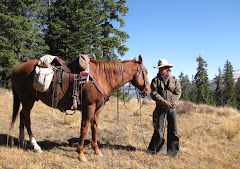
So what did I do? I turned to my back up. Another barefoot horse. One who was not sore. My little stallion, Fadjurz Ideal, otherwise known as Flying Crow. At age 7, he has never been shod. I trim his feet myself. He gets plenty of exercise (as do so many stallions on pasture, even during his free time he seems to enjoy running back and forth for hours on a path he has packed hard).

I had never guided on him before, nor ridden him on this trail, thus was more than a little apprehensive. But life throws challenges at us at times when the timing must be just right. I rode him, there and back, a full day in the mountains in some pretty nasty conditions, and you know what? We haven’t looked back since. His feet were NEVER sore from that day. Nor from the many days since that I’ve continued to keep him going on the trails with me, working and guiding.

He made a believer of me. A horse can be barefoot. In fact, a horse can thrive barefoot. The footing, the health benefits, the ease of care… it all makes sense to me, and it all can work. But it takes effort to make it work. Commitment. Time. The right conditions. Plenty of rides to allow the horse the opportunity to toughen up. Flying Crow was sore once too… about four years ago when I first brought him home from the stable in which he was raised, and turned him out on pasture. It has taken years. But it worked.

I do not doubt that this would work for all of my horses if I rode them as regularly all year long, and had them as active as my little stallion. I never manage to have all the time I wish I had for each of my horses. When and if the day comes that I do, and believe I’m working towards this, I feel certain I can prove this a success. I will be providing what I truly believe is the healthiest hoof care for my horses by keeping them barefoot.

In the meanwhile, I have my Flying Crow, barefoot and fancy free, running around the mountains with me, naturally. Reminding me (and you) that this can work. It does work and it is working. A horse can thrive barefoot, even in these conditions, in these mountains, with all this riding…

If you have any barefoot stories, ideas, suggestions or experiences to share, please leave a comment or write me directly at losttrailranch@gmail.com. I’d love to learn more and look forward to many a barefoot tales to follow…